
AR: https://kedencentre.org/2025/10/28/humanitarian-situation-in-bara-city/
North Kordofan State
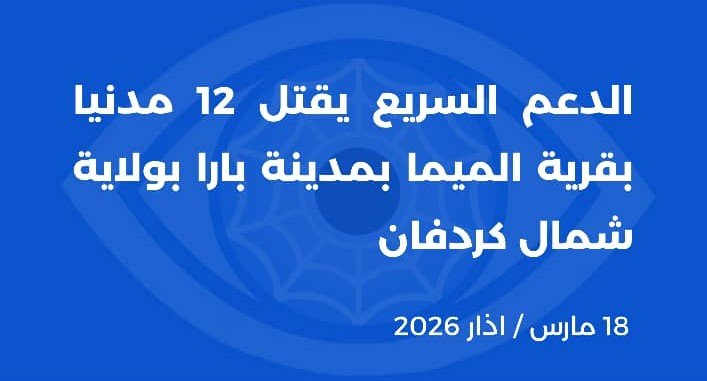
The events in the city of Bara resulted in the deaths of an estimated hundreds of civilians, according to survivor testimonies and local sources, while only the names that escapees managed to report upon reaching Al-Obeid city have been documented. Al-Obeid Hospital recorded more than 150 injury cases, some of them serious, and Alawia Yees Hospital received an additional 30 wounded. At least 80 people remain missing, along with 13 families with whom contact has been completely lost. Local organization estimates indicate the displacement of hundreds of families to Al-Obeid city and surrounding villages such as Umm Laham, Maliha, Dababis, and Tawila, under extremely harsh humanitarian conditions and a severe shortage of food, medicine, and shelter.
On October 25, 2025, the city of Bara witnessed one of its most tragic moments since the outbreak of war in Sudan, as violent clashes erupted inside the city between the Sudanese Army and the Rapid Support Forces, involving the use of heavy and medium weapons in densely populated residential neighborhoods. The battle did not last long, as the army withdrew after a few hours of fighting, leaving the city under the full control of the Rapid Support Forces, which marked the beginning of a series of widespread violations against civilians. As soon as the forces established control, they began sweep operations within the neighborhoods, randomly shooting at citizens, raiding homes, and carrying out mass arrest campaigns and comprehensive looting of markets, shops, and homes, amid a complete communications and internet blackout that isolated the city entirely from the outside world.
Eyewitnesses recounted that the forces stormed residential neighborhoods and began shooting indiscriminately, leading to the deaths of a number of young men who tried to flee the city. Displaced persons who reached Al-Obeid confirmed that scenes of burning and looting were widespread, with dozens of homes destroyed, fires set in the main market shops, and thousands of residents forced to flee on foot via rural roads to neighboring villages. One witness reported that the forces stopped a group of civilians heading towards Umm Laham village and summarily executed five of them, including his brother, while another stated that 10 people were killed inside a funeral reception area in the city center, an incident that shook the local community and demonstrated the excessive cruelty exercised against defenseless residents.
Arrests also affected a large number of citizens taken from their homes under the pretext of belonging to military intelligence. The arrests were concentrated in the Eastern Neighborhood, the Market Neighborhood, and the Western Neighborhood, where a number of young men were detained and taken to unknown destinations. Testimonies from areas near Sharshar village also indicate other field executions carried out by Rapid Support Forces elements in the city’s outskirts.
These events resulted in the deaths of large numbers of civilians, with field estimates indicating the number of dead to be in the hundreds. However, the complex security conditions and systematic targeting of civilians prevented precise casualty counts, as only the names that survivors managed to convey after fleeing to Al-Obeid city have been documented. Among the known victims are Emad Al-Mahi Ma’rouf, Abulghaith Ismail Adam Hassan, Nizar Misbah Mohamed Ibrahim, Mohamed Amin Adam Hassan (Trooper), Maki Ahmed Maki Ahmed Ma’rouf, Mohamed Ibrahim Bashir Al-Jawakli, Mohamed Hammad Abuhameed, Khalid Hamid Bashir Al-Shaib, Mohamed Ahmed Mohamed Ismail Al-Baqir, and Omar Bashir Suleiman, in addition to dozens of names whose fate has not yet been verified.
In Al-Obeid city, the main hospital received more than 150 wounded, some in critical condition, including Uncle Ibrahim, who was shot below the ear, and Mrs. Halima Mohamed Ali, who was shot in the chest. Alawia Yees Hospital received an additional 30 injured, according to a statement from one of the doctors handling the cases. While some wounded were transferred to other hospitals in North Kordofan, a number of them succumbed to their injuries before reaching their destination due to the lack of transportation and ambulances.
As for the missing, initial estimates indicate at least 80 people, in addition to 13 families with whom contact has been lost since the day of the attack, including women, children, and the elderly. The documented lists include names of entire families from various neighborhoods of Bara, such as the families of Abubakr Ali Al-Abeid, Ahmed Al-Tijani Hammad, Khansaa Hamid Yees and her children, Al-Hafiz Ahmed Al-Bashir and his family, and the family of Ahmed Mohamed Jumaa, alongside dozens of other cases still being searched for in the surrounding villages and roads. Witnesses from the area indicated finding bodies buried in scattered locations near the road leading to Umm Laham, believed to be civilians killed while trying to escape.
Large numbers of the city’s residents were displaced after the attack, with families leaving in small groups on foot under shelling, heading towards nearby villages like Maliha, Dababis, Tawila, and Umm Laham. One survivor reported that they reached Umm Laham village in a dire humanitarian state after everything they owned was looted, and some continued walking towards Al-Obeid city the next day in search of safety. With the ongoing displacement, the neighboring villages have turned into areas overcrowded with displaced people, lacking the most basic necessities of life, as there is no potable water or sufficient food supplies, while families stay in the open without shelter or humanitarian aid.
By October 27, 2025, the city of Bara was almost empty of military presence from either side, but was immersed in a state of fear and anticipation. The streets are deserted, markets destroyed, and government institutions closed, while those residents who remain stay in their homes, fearing renewed clashes or retaliatory operations. The surrounding villages are witnessing continuous displacement movements towards Al-Obeid amid a severe shortage of basic materials and a lack of health services, while many are unable to reach the city due to road closures and security risks.
The events witnessed in Bara have left a deep impact on the city and its residents. Social life has disintegrated, markets and public facilities have collapsed, and rates of displacement, disappearance, and killing have risen to unprecedented levels. The city today lives in a complete security vacuum after the withdrawal of both sides, threatening a dangerous breakdown that could lead to local retaliatory acts or new confrontations between armed groups. Simultaneously, the suffering of the displaced in Al-Obeid and rural areas is increasing due to scarcity of food and water and the absence of aid.