EN: https://kedencentre.org/2025/11/22/foreign-presence-sudan_en
Introduction
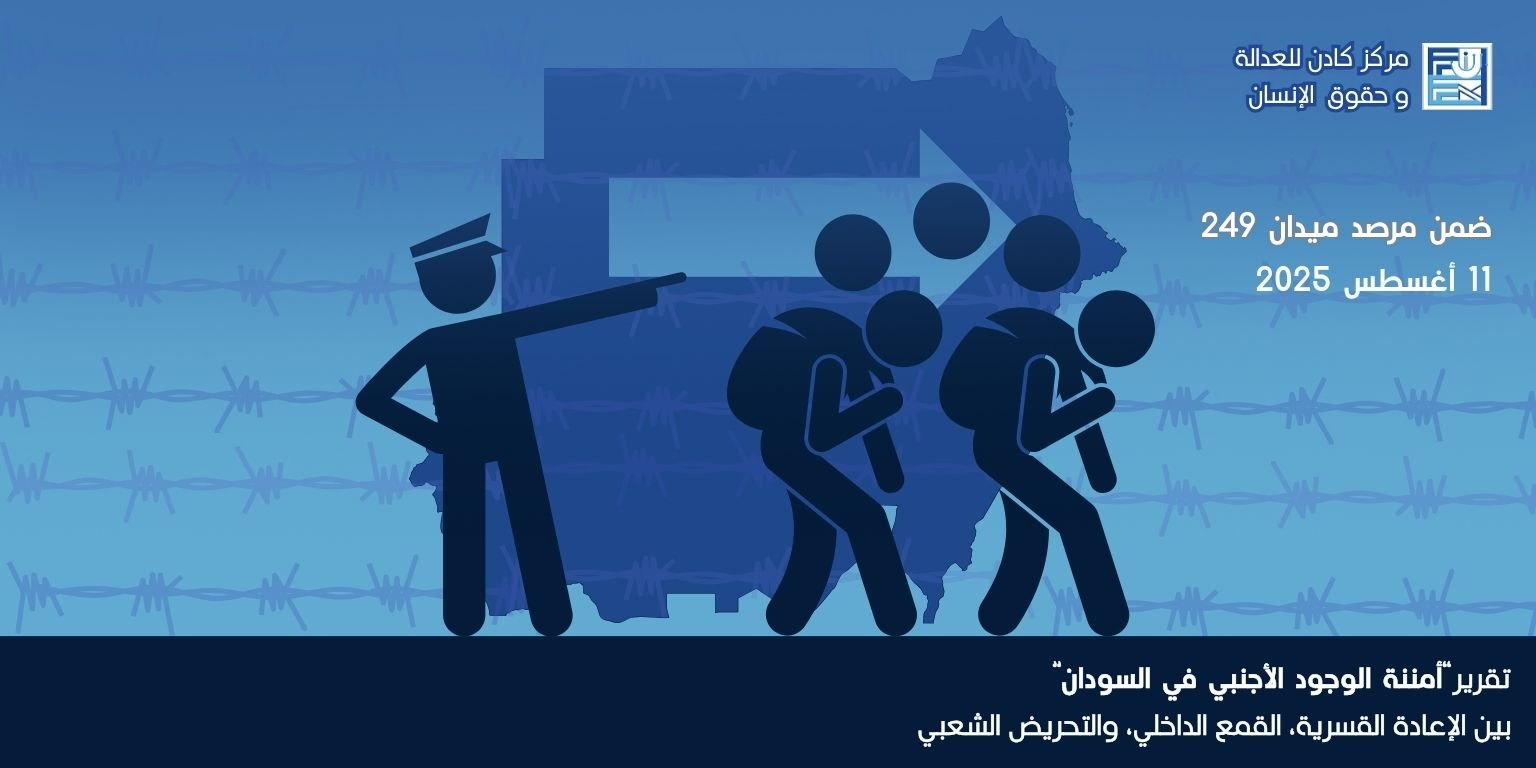
The Sudanese capital, Khartoum, and several other cities are witnessing an escalating security and media campaign targeting foreign presence, particularly Ethiopians and South Sudanese nationals, during May, June, and July 2025. This campaign comes amid a climate of armed conflict between the Sudanese army and the Rapid Support Forces, amid mutual accusations of foreign involvement in the fighting. This campaign is being carried out under the guise of reorganizing the foreign presence, according to official announcements. However, the context suggests more complex dimensions that blend politics, security, and racism.
According to data from the United Nations High Commissioner for Refugees (UNHCR), Sudan was home to approximately 1.3 million refugees and asylum seekers before the outbreak of war in April 2023, including at least 900,000 from neighboring countries such as South Sudan, Ethiopia, Eritrea, and Chad. With the outbreak of war and the escalation of internal displacement, the issue of "foreign presence" became a rhetorical tool in the context of the war, particularly by media outlets and parties affiliated with the former regime (the National Congress Party), which increased the mobilization and selectivity of the response to the issue.
In May 2025, the Sudanese Ministry of Interior announced the launch of an official campaign to deport "illegal" foreigners. The statement confirmed that "the General Directorate of Passports and Immigration, in coordination with relevant authorities, has begun implementing a national campaign to deport illegal foreigners, as part of a plan to regulate and control the movement of foreigners in the country." Khartoum Governor Ahmed Osman also stated that "the plan will include all foreigners without exception." This seemingly neutral statement, however, actually intersects with media campaigns and political rhetoric that systematically target specific nationalities.
These measures were linked to a rhetorical narrative linking the presence of foreigners to espionage or fighting alongside the Rapid Support Forces, without providing sufficient legal evidence. Collective accusations were circulated through pro-army media and voices from the former regime, speaking of alleged “subversive and intelligence roles.” In a controversial statement, Nidal Osman, media and public relations advisor to the commander of the Timboro forces (allied with the army), said that “the Battle of Dignity will be the beginning of the end of the foreign presence in Sudan,” asserting that the “genuine Sudanese people” had once again rallied behind their army in the face of what she described as a “rebellion.”
It is worth noting that, even before the outbreak of the war, the Sudanese police conducted periodic inspection campaigns targeting even regular migrants and some refugees. These campaigns often resulted in arbitrary arrests and heavy fines, within a system known as "public order courts," which were heavily criticized by human rights organizations for their lack of procedural fairness and their use as a tool for discrimination and extortion.
But the current escalation goes beyond direct legal or security considerations; it reflects a broader ideological-security orientation that seeks to redefine national identity along exclusionary lines, excluding foreigners and vulnerable groups from the public sphere and reasserting the old supremacist state project. This orientation evokes the legacy of the previous regime, which long linked the concepts of security to ethnic and religious affiliation, and provides the military with popular cover to reproduce its symbolic authority. It is also being used by some actors within the military as a tool to bolster their legitimacy vis-à-vis the Rapid Support Forces, portraying the military as the guardian of national sovereignty and the representative of the "authentic Sudanese" in the face of the "foreign threat." This reflects a deeper attempt to regain hegemony over the state and society at a time of total collapse of political and legal frameworks.
Report objectives
This report focuses on the phenomenon of forced deportation and forced expulsion of foreign refugees and migrants from Sudan, particularly since the outbreak of war between the Sudanese Armed Forces and the Rapid Support Forces on April 15, 2023. It aims to document and analyze the policies and practices pursued by the Sudanese authorities towards foreigners, and the resulting serious violations of the principle of non-refoulement and contravention of Sudan's obligations under international human rights law and international humanitarian law.
The report seeks to achieve the following objectives:
- Documenting cases of forced deportation and related violations, including mass arrests, arbitrary detention, and ill-treatment during deportation.
- Analyzing national legal and regulatory frameworks related to residence, immigration, and asylum, and their compatibility with international standards, particularly the principle of non-refoulement.
- Monitoring the shifts in official and media discourse that accompanied the deportation campaigns, and how it was used to incite public opinion and justify violations.
- Highlighting the discrimination and collective violations that have affected specific groups of refugees and migrants, such as Ethiopians and citizens of South Sudan.
- Alert the international community and UN organizations to the escalating violations, and call for urgent interventions to protect affected groups and prevent further forced displacement.
- Provide actionable recommendations to the Sudanese authorities, and to international and regional organizations, to halt forced deportations and ensure respect for the fundamental rights of foreigners.
- Support evidence-based legal and human rights advocacy efforts, and build a solid foundation for future accountability for these violations.
Documentation and Analysis Methodology
This report is based on a multi-source methodology, combining field research and legal analysis, and includes the following:
- Direct testimonies and qualitative interviews with affected refugees and migrants, conducted via field mediators or by telephone between May and July 2025.
- Review official documents issued by the Sudanese authorities regarding immigration, residency, and forced deportation policies, along with relevant court files.
- Analyzing content from open sources, including reliable media coverage and verified social media testimonials.
All data was analyzed from a legal and human rights perspective, with strict adherence to integrity and ethical documentation standards, and ensuring the complete confidentiality of the identities of witnesses and sources to protect them from any potential harm.
Time and geographic range
This report covers the period from April 15, 2023, the date of the outbreak of the war between the army and the Rapid Support Forces, to July 30, 2025, focusing on decisions issued against foreigners since March 2025. It also examines the changing contexts in state policies toward foreigners before and after the current war.
In terms of geographical scope, the report focuses primarily on the capital, Khartoum, and the states of Al-Jazeera, where widespread violations against refugees and migrants have been documented.
Historical background
Since Sudan's independence in 1956, its geographical location and ethnic diversity have attracted extensive regional movements. It has served as a transit and settlement point for refugees from Ethiopia, Eritrea, Uganda, and other countries, particularly in the 1970s and 1980s due to armed conflicts and famines. Sudan then received hundreds of thousands of refugees, based on the 1951 Convention, the 1967 Protocol, and the 1969 Organization of African Unity Agreement.
Despite this role, the state failed to develop coherent asylum policies. Instead, it witnessed periods of politicization and security exploitation of the refugee issue, particularly during periods of military rule and in the 1990s under al-Bashir's regime, when the issue of foreigners became a tool for negotiation and political pressure. Security campaigns against some communities expanded, paralleling legal discrimination and economic exploitation, with the majority being denied legal documentation.
At the turn of the millennium, irregular migration through Sudan escalated, and it became a major transit route for migrants heading to Europe. This sparked European interest, leading to security cooperation policies, particularly after the "Khartoum Process" (2015). Despite the international support Sudan received to control migration, these policies effectively empowered the security services, providing them with tools to suppress foreigners rather than protect them, amid growing impunity.
In recent years, preceding the outbreak of the April 2023 war, public discourse toward foreigners became more hostile, and their presence was linked to the economic crisis and security chaos. Media and security campaigns began to emerge that linked foreigners to crime or a threat to sovereignty, creating fertile ground for escalating discrimination and institutionalized violence.
Context - The April 15 War and the State's Policy Shifts Towards Foreigners
The outbreak of war between the Sudanese Armed Forces and the Rapid Support Forces on April 15, 2023, led to a complete collapse of state institutions, transforming the country into an extremely dangerous environment for refugees, migrants, and foreigners in general. The judicial and administrative systems have severely deteriorated, opening the way for repressive practices and serious violations.
In the absence of judicial and institutional oversight, security and military agencies, along with the Ministry of Interior, have intensified campaigns of arbitrary arrests, detention, and forced deportation. Laws and courts that had been abolished or suspended, such as public order courts, have been reactivated to try foreigners on charges of forgery or expired residency, denying them basic legal guarantees.
Some foreigners were forcibly returned to Sudan after third countries refused to accept them, while cases of arbitrary extradition of foreigners to their home countries were recorded despite the risks to their lives, in flagrant violation of the principle of non-refoulement enshrined in international law. What is striking is that these practices are no longer confined to official state agencies but have extended to de facto authorities, militias, and informal networks, exacerbating the situation.
These policies have also had repercussions internally and externally. Domestically, foreigners have become one of the most vulnerable groups, while abroad, Sudanese in neighboring countries, particularly South Sudan and Uganda, have been subjected to harassment and retaliatory treatment in light of events in Sudan.
These transformations reflect not only a legal crisis, but also part of the reproduction of power and identities in post-war Sudan, where a constitutional framework is absent, the powers of the security and military apparatuses overlap, and foreigners' files are used as tools of social and political control.
Legal basis
Sudan's treatment of foreigners, including refugees, migrants, and asylum seekers, is governed by a multi-layered legal framework encompassing national law, international standards, and regional agreements. This framework obliges the state to provide protection, ensure non-refoulement, humane treatment, and due process, particularly in light of the ongoing armed conflict since April 2023.
-
National Law
- Constitutional Document (2019)
- Despite its suspension, it remains an important reference in rights; Articles 7 and 27 guarantee respect for the human rights of all individuals, including foreigners.
- Asylum Regulation Act (1974)
- It gives the UNHCR powers to protect refugees and prevents unlawful expulsion.
- Passports and Immigration Law (1994)
- It regulates the residence of foreigners and the conditions for legal deportation, and stipulates procedures that take into account the right to grievance.
- Criminal Procedure Code (1991)
- Regulates conditions of detention and prohibits arbitrary arrest or torture.
- Criminal Law
- It criminalizes degrading treatment and unlawful detention.
-
international law
- Refugee Convention (1951) and Protocol (1967)
- It obliges not to expel or return anyone to a country where their life or freedom would be threatened (the principle of non-refoulement).
- اتفاقية مناهضة التعذيب (1984)
- تحظر تسليم أو إعادة أي شخص إلى بلد يُرجّح فيه تعرضه للتعذيب. صدّق السودان عليها في 2021.
- العهد الدولي الخاص بالحقوق المدنية والسياسية (1966)
- يضمن الحق في الحياة، حرية التنقل، الحماية من الاحتجاز التعسفي والمحاكمة العادلة، وتنطبق بنوده على الجميع، مواطنين وأجانب.
-
الالتزامات الإقليمية
- اتفاقية كمبالا (2009)
- رغم تركيزها على النازحين داخليًا، إلا أنها تشمل التزامات بحماية المتأثرين بالنزاعات، بما في ذلك الأجانب.
- ميثاق الاتحاد الإفريقي لحقوق الإنسان والشعوب (ميثاق بانجول)
- يؤكد على حماية الكرامة الإنسانية ويحظر الطرد الجماعي للأجانب، ويكفل حرية التنقل واختيار مكان الإقامة
السياسات والممارسات الرسمية تجاه الأجانب
أولًا: قبل اندلاع الحرب – نهج متذبذب بين الاستيعاب والرقابة
شهدت سياسة السودان تجاه الأجانب، خصوصًا اللاجئين والمهاجرين غير السودانيين، تحولات متكررة قبل 15 أبريل 2023، نتيجة تغير الحكومات وتبدل أولويات الدولة. تاريخيًا، اتسمت هذه السياسة بمزيج من الالتزام الإنساني، والانخراط في الاتفاقيات الدولية، إلى جانب توظيف الوجود الأجنبي كأداة سياسية وأمنية.
خلال الفترة الانتقالية (2019–2021)، أعلنت الحكومة المدنية نيتها إصلاح قانون اللجوء وتنظيم أوضاع اللاجئين، خاصة من دول الجوار. لكن الممارسات على الأرض ظلّت تعاني من انتهاكات، أبرزها الاعتقالات التعسفية، ظروف الاحتجاز غير الملائمة، وصعوبات تسجيل اللاجئين لدى مفوضية اللاجئين وضعف إصدار الوثائق.
كما استُخدم قانون الهجرة والنظام العام لإجراء محاكمات سريعة، غالبًا دون توفير المساعدة القانونية، في بيئة قانونية مزدوجة لا تطبّق التزامات السودان الدولية فعليًا، ما ترك الأجانب عرضة للاستهداف والابتزاز.
ثانيًا: بعد اندلاع الحرب – عسكرة السياسة وتكثيف الاستهداف
مع اندلاع الحرب في أبريل 2023، أصبحت السياسة تجاه الأجانب أكثر عنفًا وتقلبًا، خاصة في المناطق الخاضعة للحكومة. ارتبط الوجود الأجنبي، لا سيما لمن يحملون سمات عرقية معينة أو جنسيات من دول الجوار، باتهامات أمنية غير مثبتة.
- القرارات الإدارية:
في يناير 2024، أصدرت وزارة الداخلية قرارًا يشترط تحديث بطاقات اللجوء لاستمرار الإقامة، ما عرّض الآلاف للملاحقة بسبب عدم استيفاء الإجراءات.
- حملات الاعتقال:
نُفّذت مداهمات واعتقالات عشوائية شملت الأسواق ومراكز العمل، تخللتها انتهاكات مثل الضرب والإهانات العنصرية والابتزاز المالي. لم يُسمح لكثير من المعتقلين بالتواصل مع محامين أو ذويهم، وتعرض بعضهم للترحيل دون إجراءات قانونية واضحة.
- الطرد القسري:
تصاعدت عمليات الترحيل، خصوصًا إلى جنوب السودان، شملت مرضى ونساء وأطفال، دون منحهم فرصة للطعن أو إعادة طلب اللجوء.
- المحاكمات:
استُخدمت نيابات ومحاكم مثل نيابة المطار ومحاكم النظام العام سابقًا لإصدار أحكام سريعة، غالبًا دون تمثيل قانوني، في خرق صريح لمعايير العدالة.
- دور الأجهزة الأمنية:
رُصدت حالات ابتزاز عند الحواجز الأمنية وقيود على وصول الأجانب إلى خدمات الصحة والتعليم، ضمن سلوك ممنهج يقيد حركتهم ويعزلهم اجتماعيًا.
- الخطاب الرسمي والإعلامي:
أُنتج خطاب تعبوي يربط الأجانب بالتخابر والعمالة لقوات الدعم السريع، تغذيه وسائل إعلام موالية للجيش وأطراف من النظام السابق. اُستخدمت توصيفات مثل “الخلايا النائمة” و”المرتزقة”، مع استدعاء سرديات من النزاعات السابقة لتبرير الإقصاء.
وقد تجلّى هذا التوجه في تصريحات علنية من شخصيات عسكرية وإعلامية بارزة، أبرزها تصريحات نضال عثمان، مستشارة لقائد قوات تمبور، التي وصفت الوجود الأجنبي بأنه “تلوث” واعتبرته خطرًا يجب التخلص منه. هذه التصريحات، التي جمعت بين العنصرية الصريحة والتحريض، لم تُقابل برفض رسمي، ما يشي بتواطؤ ضمني أو تبني كامل لهذا الخطاب في بعض مؤسسات الدولة.
الحملات الإعلامية وخطاب الكراهية
اعتمدت أطراف في الدولة، خصوصًا المرتبطة بالجيش والنظام السابق، على خطاب كراهية متصاعد يصوّر الأجانب كخطر أمني ووجودي. لم يقتصر ذلك على الإعلام الرسمي، بل امتد إلى المنصات الرقمية والتصريحات السياسية. وقد تحوّل هذا الخطاب تدريجيًا إلى ممارسات ممنهجة: تضييق إداري، طرد، وحرمان من الخدمات.
يتقاطع هذا النمط مع تجارب إقليمية خطيرة، حيث يُستخدم خطاب الكراهية لإعادة تعريف الهوية الوطنية، وتصوير “الآخر” كعدو داخلي. تغلغل هذا الخطاب في وعي بعض الشرائح المجتمعية، خاصة في ظل الأزمات المعيشية، يهدد بخلق بيئة خصبة للعنف الجماعي والانتقام الأهلي.
إن هذا التحريض لا يمثل فقط خطرًا على اللاجئين، بل يُقوض السلم الاجتماعي في السودان ويضع الدولة على مسار تصادمي مع التزاماتها الدولية، لا سيما اتفاقية اللاجئين لعام 1951. عليه، يصبح التوثيق المنهجي لهذه الحملات ومساءلة الفاعلين فيها أولوية ملحّة، لضمان الحماية، ومحاربة خطاب الكراهية، والدفع نحو بدائل إعلامية وقانونية تحترم التنوع والكرامة الإنسانية
الانتهاكات المرصودة
مع تدهور الوضع الأمني والإنساني في العاصمة السودانية الخرطوم خلال النصف الأول من عام 2025، تصاعدت السياسات الأمنية تجاه الوجود الأجنبي، وبدأت سلطات ولاية الخرطوم في تنفيذ خطة ترحيل قسري استهدفت مئات اللاجئين والمهاجرين، خصوصًا من الجنسيات الإثيوبية وجنوب السودان، في ظروف تفتقر للضمانات القانونية والإنسانية.
بداية العمليات الميدانية – مارس 2025
في 10 مارس 2025، أطلقت سلطات ولاية الخرطوم أولى حملات الترحيل الميداني، وبدأت بنقل أعداد من الإثيوبيين وأسرهم من أحياء الحلة الجديدة، القوز، والديم، إلى معسكرات مؤقتة في ولاية القضارف، شرق السودان، تمهيدًا لإعادتهم لاحقًا إلى منطقة القلابات الحدودية مع إثيوبيا. العملية جرت بإشراف معتمدية اللاجئين، ونُفذت عبر 10 حافلات مخصصة، دون سابق إنذار أو إشعار رسمي للمعنيين.
قال أحد المرحّلين، شاب إثيوبي في الثلاثينات من عمره:
“كنا نائمين عندما طرقوا الباب بعنف. قالوا إن لدينا دقيقة واحدة فقط لجمع أغراضنا. لم نُمنح فرصة لشرح شيء أو إظهار أي أوراق. كانت فوضى.”
تشير إفادات عديدة إلى أن العشرات نُقلوا قسرًا دون فحص وضعهم القانوني، رغم امتلاك بعضهم وثائق إقامة أو بطاقات لاجئ صادرة عن المفوضية السامية.
الإعلان الرسمي – مايو 2025
في 25 مايو 2025، عقد والي الخرطوم، أحمد عثمان حمزة، اجتماعًا رسميًا مع لجنة ضبط الوجود الأجنبي، وممثلين عن معتمدية اللاجئين، وشرطة الأجانب، والمفوضية السامية لشؤون اللاجئين. أُعلن خلال الاجتماع عن بدء تنفيذ خطة لترحيل الأجانب “المخالفين” اعتبارًا من 29 مايو.
جاء هذا الإعلان على خلفية مزاعم غير موثقة تشير إلى ضلوع “أجانب مرتزقة”، خاصة من إثيوبيا وجنوب السودان، في القتال إلى جانب قوات الدعم السريع خلال فترة سيطرتها على أجزاء من العاصمة. أفضت هذه المزاعم إلى خطاب رسمي وإعلامي يُحمّل الأجانب مسؤولية أمنية، ويبرر السياسات الترحيلية دون تمييز.
قالت إحدى السيدات الإثيوبيات من حي القوز:
“اتهمونا بأننا نقاتل مع قوات الدعم السريع. نحن بالكاد نملك طعامًا. لم يغادر زوجي البيت منذ عام بسبب الرعب.”
المرحلة الثانية – تنفيذ الترحيل الجماعي
في 29 مايو 2025، بدأت المرحلة الثانية من الخطة، حيث شرعت سلطات ولاية الخرطوم في تنفيذ عمليات حصر وتجميع موسعة شملت أحياء عديدة في المدينة، بالتوازي مع تنظيم قوافل ترحيل نحو ولايات حدودية مثل النيل الأبيض، القضارف، وكسلا.
أفاد أحد الشهود ممن تمكّن من الفرار من نقطة تجميع في حي الديم:
“كانوا ينادون على أسماء من قوائم، ولا نعرف من أين حصلوا عليها. من لم يكن لديه ورقة فورية يُقتاد فورًا. لكن حتى من لديه بطاقة، لا يُسمح له بالكلام.”
يُذكر أن جزءًا كبيرًا من اللاجئين لم يتمكنوا من تجديد وثائقهم أو استخراج بدل فاقد بسبب توقف مؤسسات الدولة، ومن ضمنها إدارة الجوازات، ومكاتب المفوضية، ومعتمدية اللاجئين، نتيجة الحرب والدمار.
الحملة الأخيرة – يوليو 2025
في 29 يوليو 2025، تم توثيق حملة ترحيل جديدة انطلقت من حي الديوم الشرقية. تم خلالها اقتياد عشرات من الإثيوبيين إلى مراكز تجميع ثم نقلهم إلى خارج البلاد دون اتباع أي إجراءات للطعن أو التحقق من وضعهم، ودون إشعار المفوضية السامية لشؤون اللاجئين.
ذكرت إحدى النساء اللواتي فُصلن عن أزواجهن أثناء الحملة:
“أخذوا زوجي وابني الأكبر، ولم يُخبرونا إلى أين. حاولنا الوصول للمفوضية لكن مكاتبها مغلقة. لم يكن هناك من نلجأ إليه.”
توثيق الحالات
وفق ما تم رصده وتوثيقه ميدانيًا، بلغ عدد الأفراد الذين خضعوا لعمليات ترحيل قسري خلال الفترة من مارس إلى يوليو 2025 ما لا يقل عن 502 شخصًا، جميعهم من الجنسية الإثيوبية. توزعت الحالات على عدة أحياء بالعاصمة، وشملت أفرادًا يحملون وثائق قانونية، إضافة إلى آخرين فقدوا أوراقهم بفعل الحرب والتهجير.
قال أحد الشباب المرحّلين، ممن أعيد قسرًا إلى إثيوبيا:
“حين وصلنا إلى الحدود، تركونا تحت الشمس مع جنود لا نعرفهم. لم يكن هناك أي مسؤول سوداني معنا. فقط حافلات أنزلتنا ومضت.
التوصيات
أولًا: على السلطات السودانية
- التوقف الفوري عن جميع عمليات الترحيل القسري والاحتجاز التعسفي المبني على الهوية أو الجنسية.
- مراجعة السياسات والإجراءات المتبعة منذ اندلاع الحرب، وضمان توافقها مع المعايير الدولية لحقوق الإنسان.
- توفير مسارات قانونية واضحة للطعن في قرارات الترحيل أو الاحتجاز، وضمان حق الأفراد في التمثيل القانوني.
- ضمان وصول الأجانب، خصوصًا اللاجئين وطالبي اللجوء، إلى المساعدات القانونية، وممثلي مفوضية الأمم المتحدة لشؤون اللاجئين دون قيود.
ثانيًا: على المنظمات الدولية
- تعزيز آليات الرصد والتوثيق العلني لانتهاكات حقوق الأجانب في السودان، وتقديم تقارير دورية مستقلة.
- الضغط على السلطات السودانية لاعتماد آليات شفافة للمساءلة، وضمان محاسبة الجهات المتورطة في الانتهاكات.
- تقديم الدعم القانوني والإغاثي العاجل للضحايا، خصوصًا الفئات الأكثر عرضة للخطر مثل الإريتريين والإثيوبيين.
- دعوة الدول المضيفة للاجئين السودانيين إلى تجنب استخدام ملف الأجانب في السودان كأداة للضغط أو الانتقام، والامتناع عن سياسات “المعاملة بالمثل”، وتقديم الدعم الإنساني دون شروط سياسية.
ثالثًا: على المجتمع المدني المحلي والدولي
- تكثيف عمليات التوثيق والرصد الميداني لانتهاكات حقوق الأجانب في السودان.
- الانخراط الفعّال في جهود الضغط الحقوقي والقانوني على المستويين الإقليمي والدولي.
- إطلاق حملات إعلامية تسلط الضوء على الانتهاكات الجارية، وتدعو إلى فتح تحقيقات مستقلة ومحاسبة المسؤولين عنها أمام القانون.